Medical Design Essentials
Medical design is a specialized area of graphic creation that focuses on visual elements used in healthcare environments. It includes everything from clip art and patterns to pre-made frames and branding materials. These resources are essential for professionals who need to create consistent, high-quality visuals for hospitals, clinics, labs, and pharmacies.
Whether you're a designer, small business owner, or educator, having access to medical-themed graphics can simplify your workflow and enhance the professionalism of your projects. The right tools make it easier to produce materials like brochures, banners, and stationery that reflect the values and standards of the healthcare industry.
What Makes Medical Design Unique
Medical design typically features clean lines, professional layouts, and a limited color palette that reflects trust, clarity, and reliability. These characteristics help maintain a cohesive look across all materials, which is crucial in environments where clarity and professionalism are key.
The use of vector-based files ensures that designs can be resized without losing quality. This flexibility is especially useful when creating items like business cards, posters, or even clothing with medical themes. With the right tools, you can easily recolor and adjust elements to match your brand or project needs.
Why Medical Design Matters
For anyone working in the healthcare sector, having access to well-designed medical graphics can make a big difference. It helps create a strong visual identity that conveys professionalism and care. For example, a clinic might use these designs to create patient information brochures, while a lab could use them for signage or educational materials.
Entrepreneurs and small business owners also benefit from medical design. Whether you're launching a new wellness product or starting a health-focused blog, having high-quality visuals can help build credibility and attract the right audience.
How Medical Design Can Be Used
The versatility of medical design makes it suitable for a wide range of applications. You can use it to create marketing materials, such as flyers and banners, that promote your services or products. It's also ideal for developing stationery, including letterheads, envelopes, and business cards, that reflect your brand's image.
Another practical use is in digital content creation. Medical-themed graphics can be used in social media posts, website banners, or email newsletters to reinforce your brand's message. They can also be incorporated into educational materials, making complex information more accessible and visually engaging.
Understanding the Included Elements
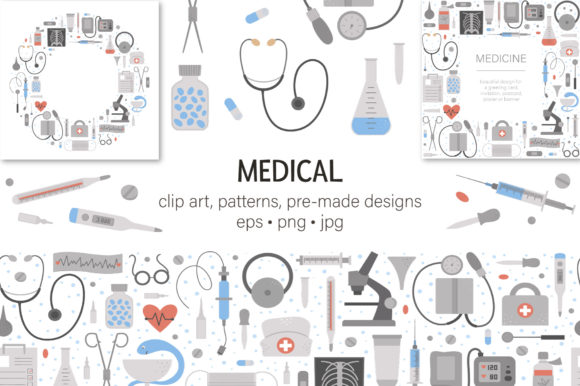
The medical set includes a variety of assets to support your creative projects. There are 38 EPS, JPG, and PNG elements, each designed for easy modification. These files come in different formats, allowing you to choose the one that best suits your needs.
In addition, there are 5 thematic seamless patterns, perfect for backgrounds or repeated design elements. The 7 pre-made frames and designs offer ready-to-use templates, saving you time and effort. A seamless border brush adds a polished touch to any layout, while the 20 branding designs provide a foundation for consistent visual identity.
Choosing the Right Medical Set
Before selecting a medical design set, consider your specific needs. Are you looking for something that can be customized, or do you prefer pre-made options? Understanding your goals will help you choose the right combination of elements.
Also, think about the size and format of the files. Vector files are ideal for scalability, while PNG and JPG files are great for web and print use. Ensuring that the files are saved on transparent backgrounds gives you more flexibility when integrating them into other designs.
Getting Started with Medical Design
If you're new to medical design, start by exploring the available elements and experimenting with different combinations. Many sets include examples or sample layouts to guide you. As you become more familiar with the tools, you'll find it easier to create professional-looking materials that meet your needs.
Don't hesitate to reach out to other designers or communities for inspiration and feedback. Sharing your work and learning from others can help you grow your skills and improve your designs over time.